
What Incentive Programs Get Right — and What They’re Quietly Shaping About Rainwater Systems
Incentive programs do more than reimburse hardware. They shape what gets built, how systems behave over time, and whether rainwater projects deliver stormwater and GSI outcomes in the real world.
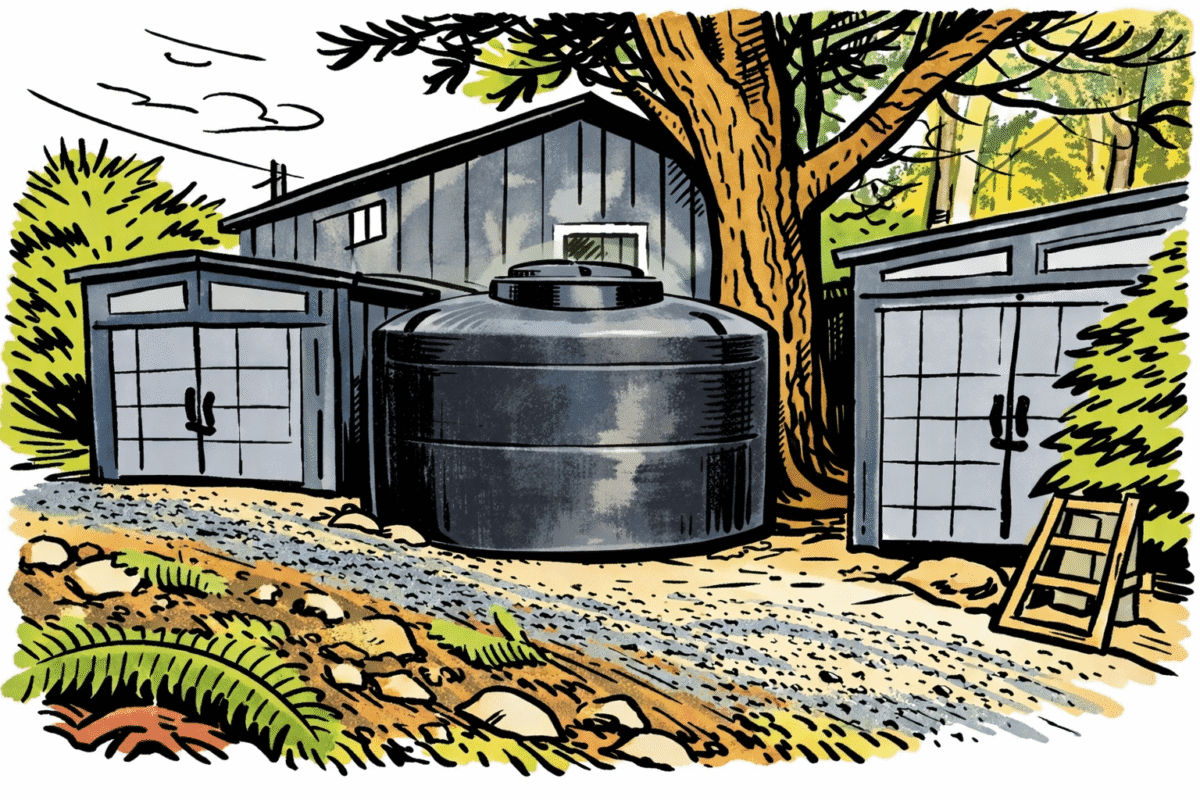
Incentive Programs Do Something Important Before They Do Anything Else
Rainwater incentive programs succeed at one critical task: they get people to think about water. For many homeowners, designers, and contractors, an incentive program is the first moment rainwater stops being abstract and becomes something concrete — a system, a decision, a piece of site infrastructure.
That matters. Awareness is not trivial. Participation is not automatic. Incentives lower friction and make rainwater visible.
But incentives do something else at the same time: they teach people how to think about rainwater systems.
Incentives Are Not Neutral — They Shape Design Behavior
Every incentive program must define eligibility. To do that, it needs measurable criteria — things like minimum storage volume, eligible roof area or downspout counts, and approved components or configurations.
These metrics are practical. They are auditable. They allow programs to operate at scale. They also act as design signals.
- When a program emphasizes tank size, designers optimize for capacity.
- When a program emphasizes downspouts, systems organize around vertical drops.
- When a program emphasizes component lists, systems become assemblies instead of site infrastructure.
This is not a failure of intent. It is an unavoidable consequence of how incentives work. Programs don’t just reward installations — they shape what the market builds.
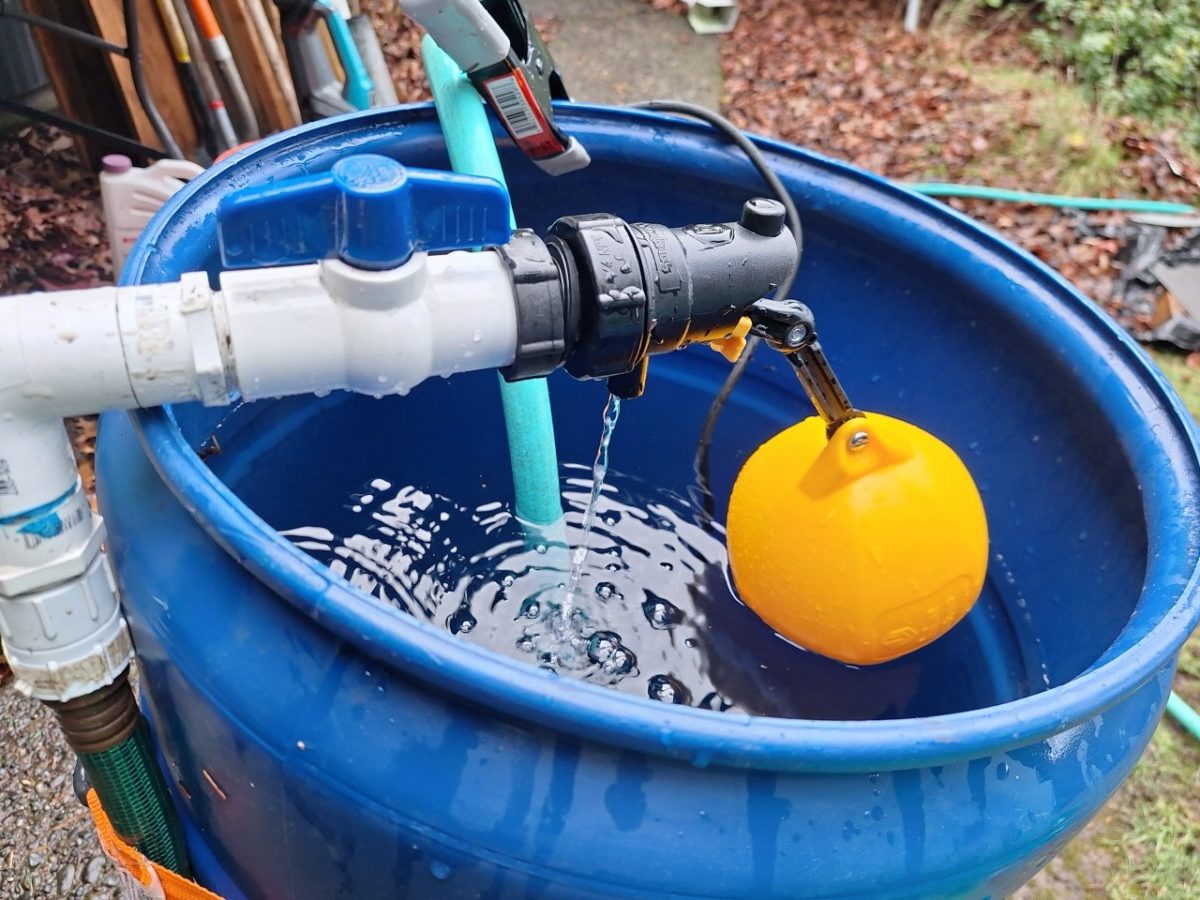
What Incentive Programs Get Right
Most incentive programs correctly assume rainwater systems should capture roof runoff intentionally, reduce burden on stormwater infrastructure, and produce measurable public benefit.
Many programs are explicitly tied to green stormwater infrastructure (GSI) goals, combined sewer overflow reduction, or watershed protection. From a policy standpoint, that framing is sound.
Incentives also normalize the idea that rainwater systems are not fringe projects. They belong in the same conversation as other forms of distributed infrastructure. That cultural shift is real — and valuable.
Where Incentives Can Quietly Distort System Design
Problems usually arise not from what programs intend, but from what their metrics emphasize. Two patterns show up repeatedly across different incentive models.
1) When incentives reward storage volume without reference to refill behavior
- Oversized tanks get installed that rarely refill when water is needed.
- Seasonal performance is misunderstood.
- Overflow pathways receive less attention than they deserve.
2) When incentives are built around downspout-centric metrics
- Systems are constrained to vertical logic.
- Natural downhill flow across the site is underused.
- Storage placement is driven by compliance, not gravity.
In these cases, systems may meet program requirements while underperforming as long-term infrastructure. They comply — but they do not fully participate in stormwater or water-use outcomes.
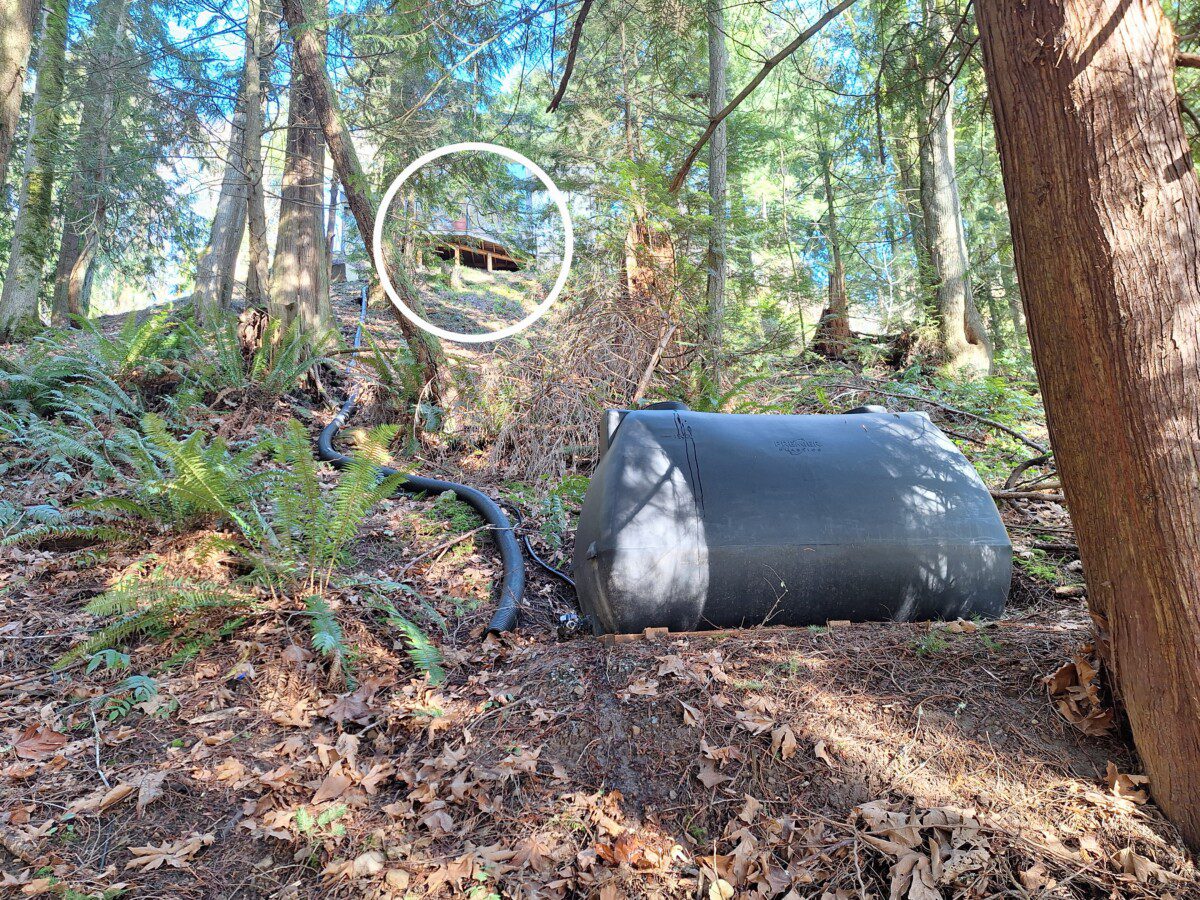
Why Refill Behavior Matters More Than Raw Capacity
A rainwater system is not defined by how much water it can hold once. It is defined by how it behaves over time.
In many climates — especially those with frequent rain and long dry seasons — well-performing systems refill multiple times, use storage as a strategic buffer, and overflow safely during heavy rain events.
Overflow is not failure. It is a normal part of stormwater participation when overflow paths are intentional. From a stormwater compliance perspective, refill and overflow management often matter more than peak storage.
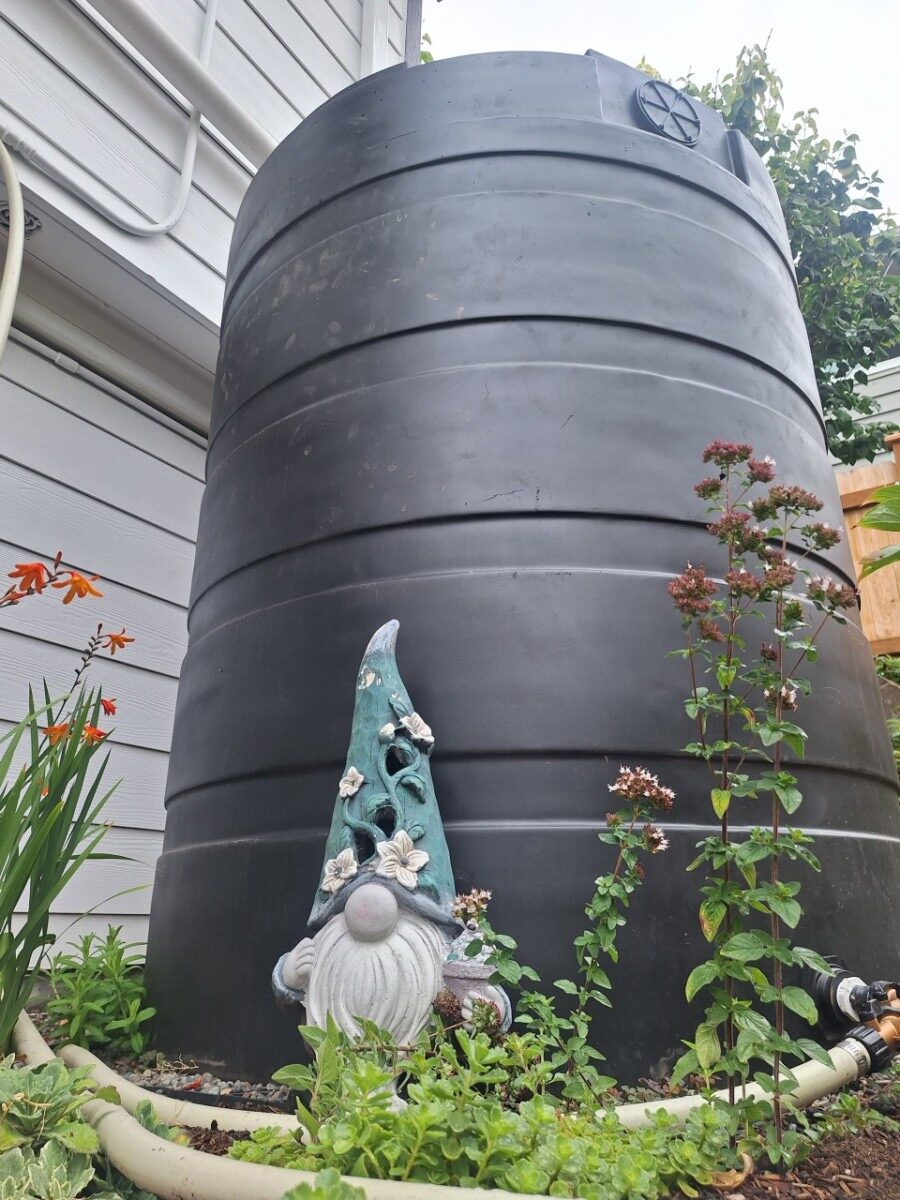
From Individual Installs to Program-Scale Outcomes
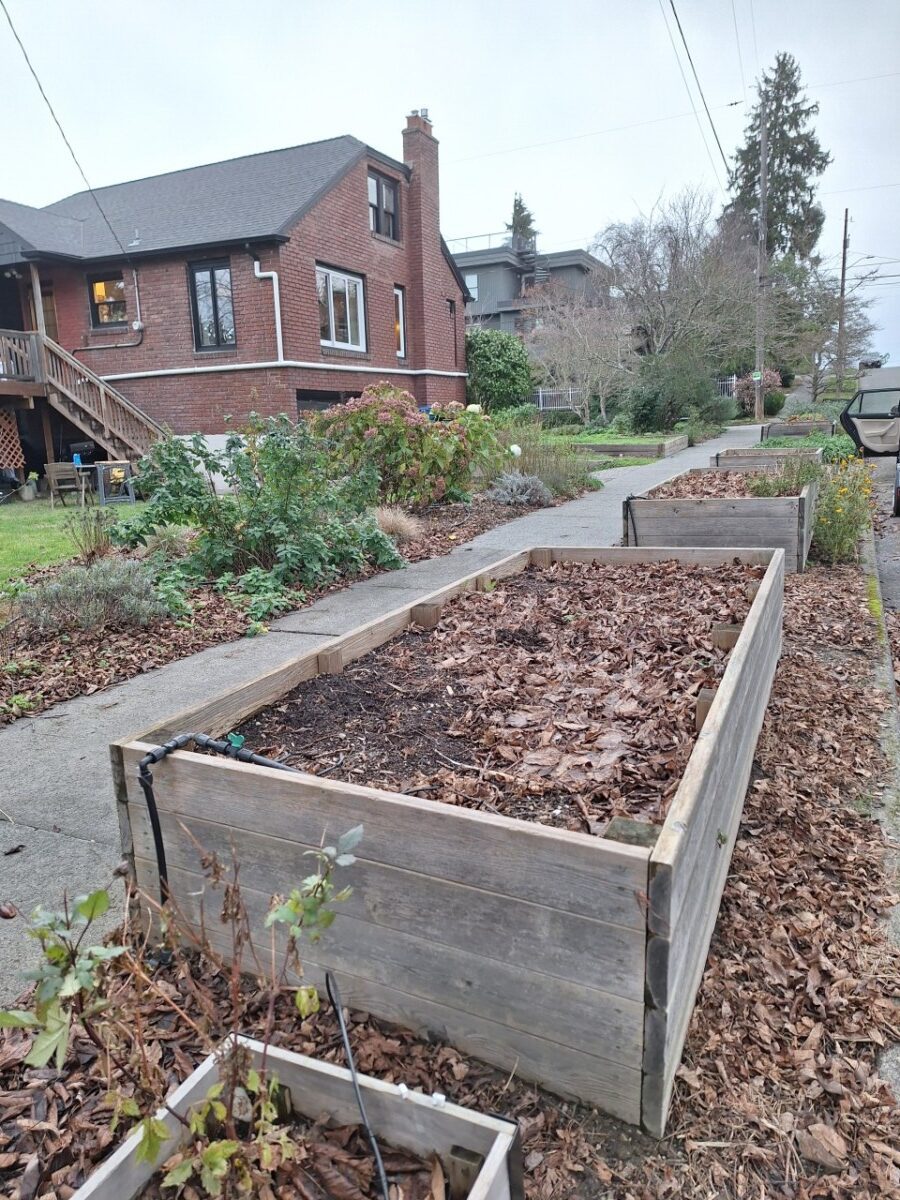
Residential rainwater systems are sometimes treated as isolated projects. In reality, they are repeatable units of distributed infrastructure.
When systems are designed around site flow rather than components, each home can contribute meaningfully to GSI goals, neighborhood-scale impact becomes more predictable, and program outcomes align more closely with real hydrologic behavior.
What This Means for Incentive Program Design
Rainwater incentives do not need to become more complicated to become more effective. They can evolve by broadening what “success” looks like — without sacrificing administrative clarity.
- Recognize storage placement, not just size.
- Treat safe overflow as functional behavior.
- Value refill and seasonal performance, not one-time capacity.
- Allow multiple valid design approaches across different site conditions and program types.
Programs that do this tend to produce systems that perform better over time, contribute more reliably to stormwater goals, and are easier for homeowners to understand and maintain.
Rainwater Incentive Program: Quick FAQ
What design behavior does this metric encourage?
Every metric teaches designers and contractors what “good” looks like. Volume-only or component-only metrics tend to reward hardware counts, while metrics that consider refill, overflow, and site flow encourage systems that behave like real infrastructure over time.
Does the program assume water moves vertically, or across a site?
Downspout-centric metrics often lock systems into vertical logic, which can underuse natural slope and site flow. Programs that allow gravity-first routing across the site make it easier to place storage and overflow where they perform best.
Are we rewarding components, or system behavior over time?
Component lists are easy to audit but can miss long-term performance. Adding criteria that reflect refill patterns, overflow management, and seasonal behavior helps ensure systems actually participate in stormwater and water-use outcomes.
Can participants explain what their system does in one sentence?
When homeowners and participants can clearly describe how their system manages rain—from roof to storage to overflow—it is more likely to be understood, maintained, and aligned with program goals.
A Perspective from Product Water
Product Water designs and operates gravity-first rainwater systems that treat rainwater as site infrastructure, not an accessory. Across residential projects, RainWise-funded work, and program-adjacent collaborations with utilities and nonprofits, we see the same pattern repeatedly:
Incentives that shape design thinking produce stronger outcomes than incentives that simply reimburse hardware.
Our team is listed as a Seattle RainWise contractor and participates in outreach efforts that support programs like the 700 Million Gallons RainWise initiative, helping homeowners and partners align individual systems with neighborhood-scale stormwater goals.
Rainwater incentive programs are powerful tools. Used thoughtfully, they don’t just fund systems — they teach the market how water actually moves, and what good performance looks like over time.
Our work sits alongside public and nonprofit efforts to scale green stormwater infrastructure, including programs like Seattle’s 700 Million Gallons RainWise program. We help bridge homeowner-scale systems and program-scale outcomes.
Ready to Rethink Your Rainwater Incentive Metrics?
If you’re designing or managing a rainwater incentive program, we can help you align eligibility criteria with real system behavior — refill, overflow, and site flow — instead of just hardware lists.
Schedule a 30‑minute incentive program review, and we’ll walk through your current metrics, identify where they may be distorting design decisions, and outline practical options that support GSI and compliance goals.