
Seattle RainWise Case Study
See how first-time South Seattle homeowners turned a roof drainage concern into reliable garden water using a Seattle RainWise–eligible rainwater system.

When Elon and his partner purchased their first home in South Seattle, they inherited what many homeowners hope for—a mature garden with established planting beds and existing landscape character.
Along with that came a familiar concern: how to safely manage the rainwater falling on the roof while protecting the home’s foundation and keeping the garden thriving through Seattle’s dry summer months.
“Priority one was getting the water away from the house so the rainwater wasn’t going down into the foundation.”
Like many homeowners who have heard about Seattle’s RainWise program, they understood that roof water could be routed to a cistern, but they did not yet see how a RainWise system could protect the home and directly support their garden.
This South Seattle property qualified for Seattle’s RainWise program, which offers rebates for systems that slow and manage stormwater before it reaches the combined sewer system.
Understanding how to connect a Seattle RainWise system to both the home and the program requirements can feel complex at first, but once the right connection point is identified, the physical hookup is often the easiest part.
“The things we didn’t know didn’t end up being bad surprises—once we found the connection point, the hookup was actually the easy part.”
Product Water guided the project through RainWise compliance, system layout and placement, and integration with practical irrigation use so the system would perform quietly in the background.
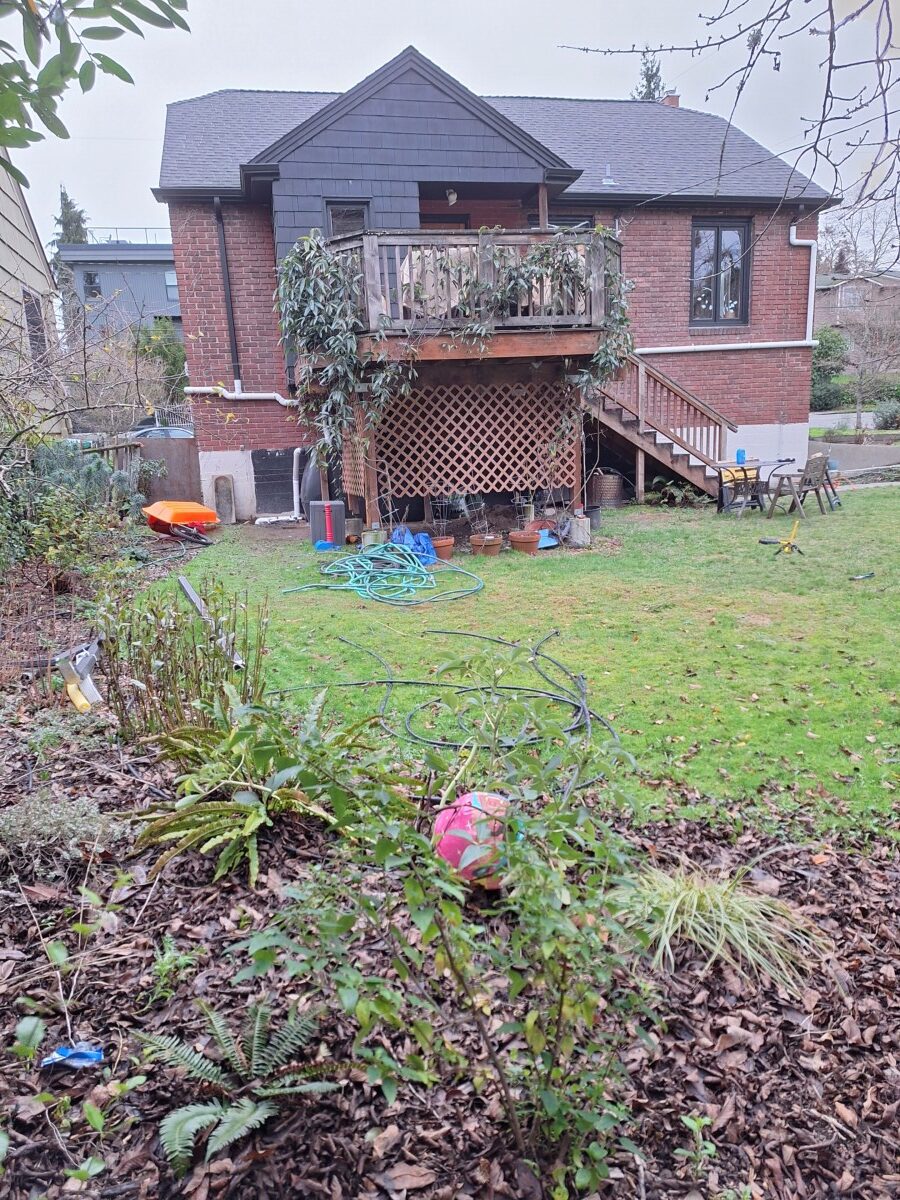
One of the most important realizations for homeowners is how much water actually lands on their roof each year, even on a relatively modest home.
In this case, the home’s roof area is approximately 909 square feet, which in Seattle’s climate can receive around 20,000 gallons of rainfall annually when you add up the full rainy season.
Instead of sending this volume straight into the drainage system, a properly designed RainWise system manages it at the property, protecting the home and putting water to work in the garden.
A simple way to estimate roof rainfall is to use this visual formula:
Roof Area × Rainfall (inches) × 0.62 = Gallons Collected
For example, one inch of rain on a 1,000 square foot roof produces about 620 gallons of water, which makes it easy to see how quickly a Seattle roof can deliver thousands of gallons to a cistern or garden each season.
To run this calculation for your own home and see seasonal refill behavior, use the Product Water calculator: Plan Your Rainwater Strategy – Roof Rainfall Calculator .
This Seattle RainWise system was designed to capture and manage 100% of the roof runoff from the 909 square foot roof, while meeting program requirements and supporting irrigation use.
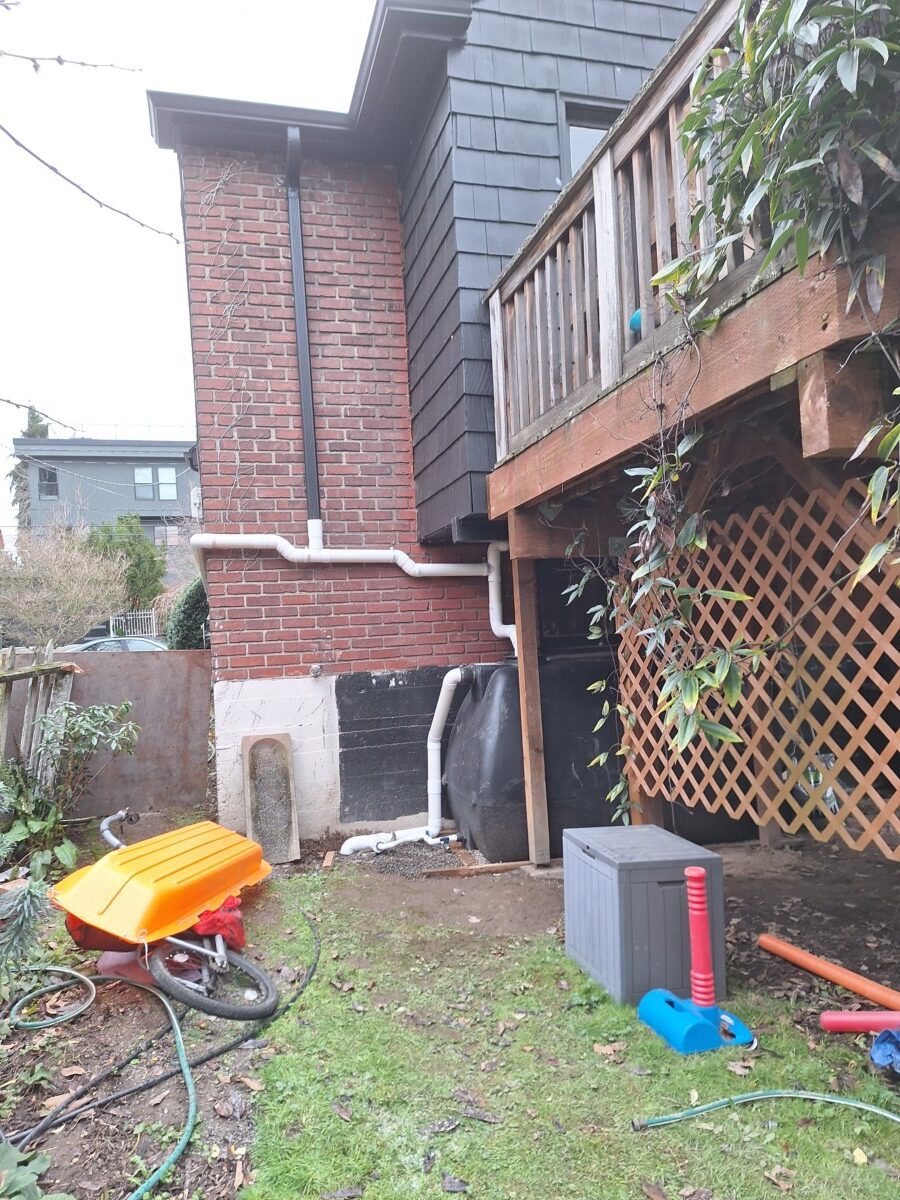
Under RainWise guidelines, the system manages water differently in the wet winter season versus the spring–fall growing season, using the same hydraulic layout for both stormwater control and garden irrigation.
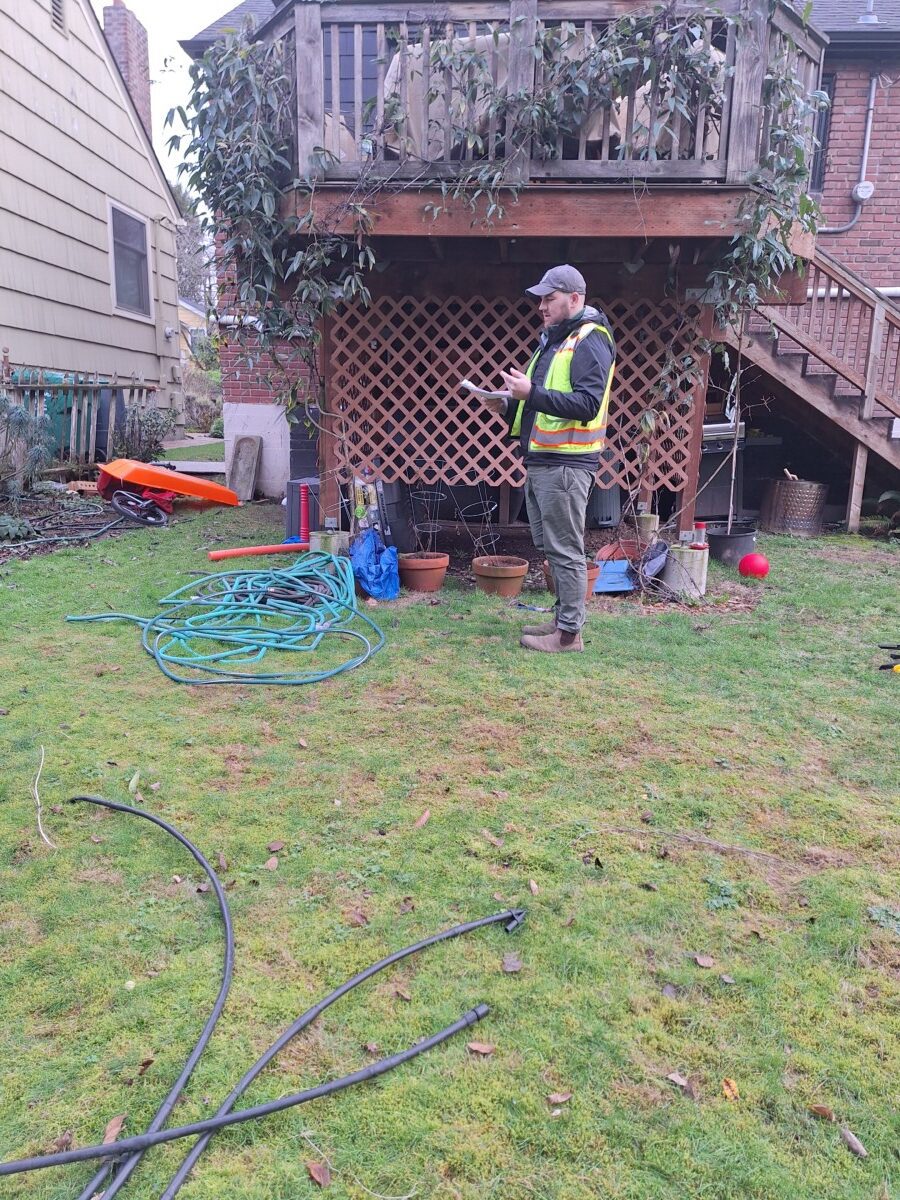
Once the system was installed and operating, Elon could see that both core priorities had been met: the home was protected from unmanaged roof runoff, and the garden now had a dedicated rainwater supply.
“Priority one was getting the water away from the house… and priority two was collecting some rain. It seems like we basically had all of those accomplished.”
Today the system runs quietly in the background, managing roof runoff, supporting the existing landscape, and turning water that once left the property unused into a daily resource for the garden.
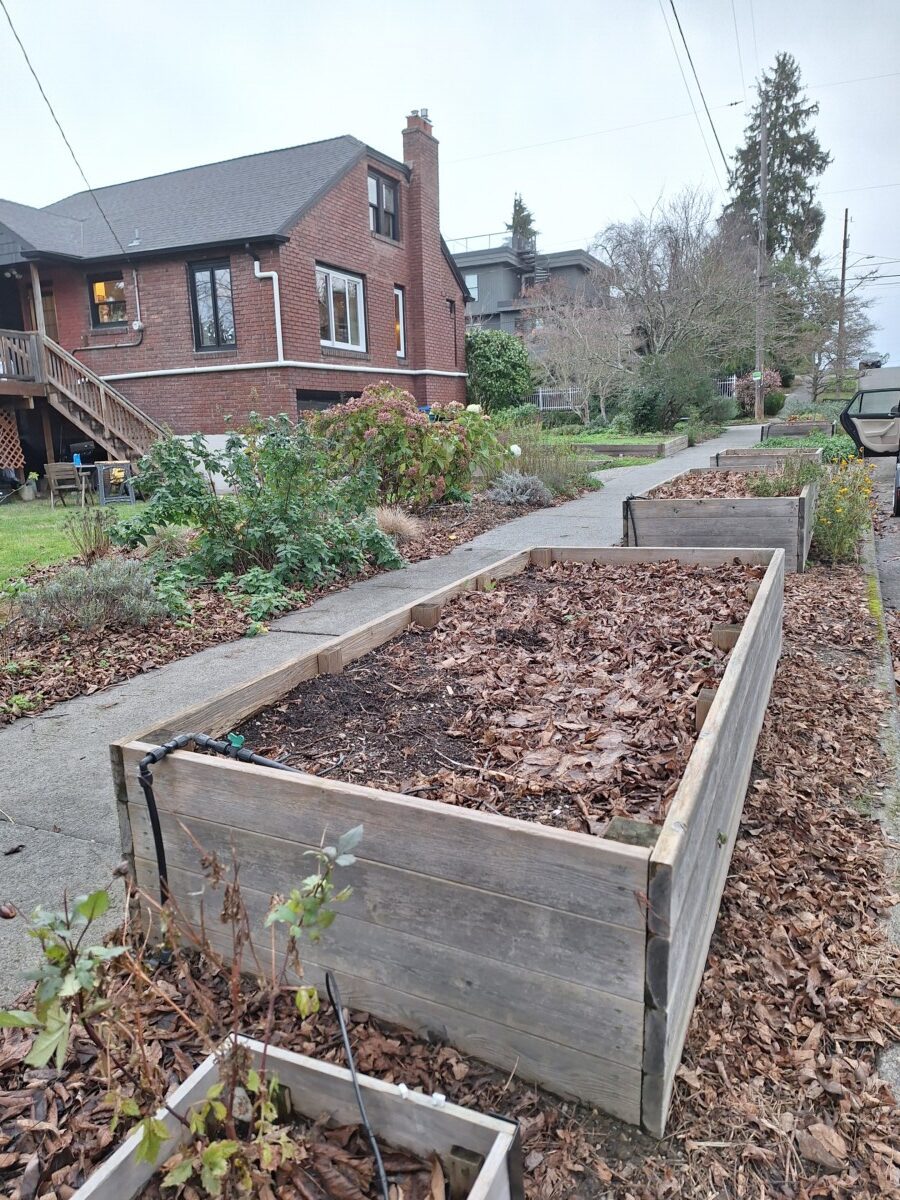
A 909 square foot roof in Seattle can receive roughly 20,000 gallons of rainfall over a typical year, which is more than enough to support garden irrigation when captured and managed correctly.
A standard rain barrel usually holds 50–60 gallons, which is only a fraction of what a mature garden uses in a dry stretch; a right-sized cistern and refill strategy provide a much more reliable irrigation source.
RainWise systems are designed first to slow and manage stormwater before it reaches the combined sewer, but by capturing roof runoff in cisterns they can also provide practical water for gardens and landscapes.
Multiply your roof area by the seasonal rainfall (in inches) and by 0.62 to estimate gallons, or use the Product Water calculator to map your roof and see seasonal refill behavior specific to your address.
For most Seattle homes, the best tank size balances roof area, irrigation needs, available space, and RainWise requirements; in this case, a 450 gallon cistern under the deck delivers strong performance without taking over the yard.
Curious how much rainwater your roof could collect—and how often your tank might refill through a Seattle winter? Use the Product Water calculator to map your roof and see your seasonal rainwater potential.
Ready to turn your own roof runoff into a garden water source while meeting Seattle’s stormwater goals? Start with a quick roof mapping and rainfall estimate, then explore how a horizontal, hydraulic system could fit your site.